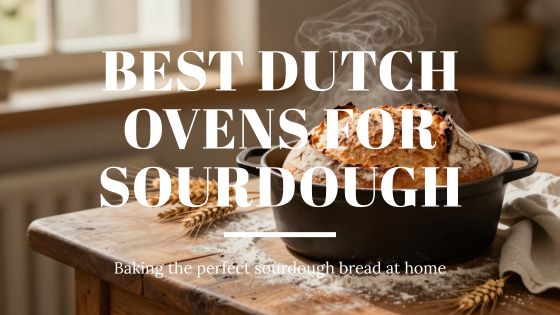

A Dutch oven can transform a pale, spreading loaf into the kind of sourdough that crackles as it cools. The heavy pot stores heat, while its tight lid traps moisture released by the dough. That temporary steam chamber keeps the crust flexible during the first part of baking, giving the loaf time to rise before the surface browns and crisps. You do not need a professional steam-injected oven, but you do need cookware that fits the dough, tolerates the recipe’s temperature, and can be handled safely when blazing hot.
For this guide, we selected eight cast-iron options sold on Amazon.com for U.S. home bakers. The list includes affordable bare iron, easy-care enamel, premium French cookware, and larger pots that can serve as everyday family cookware after bread day. We compared capacity, lid design, oven limits, handles, maintenance, and how easy it is to lower soft dough into the pot. A five- to six-quart round oven is the most useful range for a typical boule made with roughly 500 grams of flour, but recipe size and vessel dimensions matter more than the number printed on the box.
Remember that sourdough baking commonly involves temperatures around 450°F, and some formulas run hotter. Always follow the lower of your recipe temperature and the cookware manufacturer’s limit, including the rid knob. Rating: Preheating an empty enameled pot can also vary by brand, so check the current care guide rather than assuming every Dutch oven follows the same rules. With those details settled, the right pot can produce lofty loaves and still earn its cabinet space through soups, braises, roasts, and weeknight dinners.
Quick Comparison of Our Top Dutch Ovens
| Product | Best for | Capacity | Surface | Key bread-baking advantage |
|---|---|---|---|---|
| Lodge 5-Quart Double Dutch Oven | Best overall for sourdough | 5 qt | Preseasoned bare cast iron | Shallow skillet lid can become the loading base |
| Lodge 6-Quart Essential Enamel | Best enameled value | 6 qt | Porcelain enamel | Roomy, multipurpose shape and 500°F rating |
| Le Creuset Signature Round | Best premium investment | 5.5 qt | Enameled cast iron | Wide handles, light interior, stainless knob |
| Staub Round Cocotte | Best dark-interior premium pick | 5.5 qt | Matte black enamel interior | Tight lid and high-temperature metal knob |
| Cuisinart Chef’s Classic | Best large-capacity value | 7 qt | Porcelain enamel | Extra room for large doughs and family cooking |
| Crock-Pot Artisan | Best affordable 5-quart enamel | 5 qt | Porcelain enamel | Practical boule size at an accessible tier |
| Amazon Basics Dutch Oven | Best budget 6-quart option | 6 qt | Enamel | 500°F listed limit and dual handles |
| Overmont Double Dutch Oven | Best lower-cost inverted baker | 5 qt | Preseasoned bare cast iron | Two-in-one skillet lid simplifies loading |
Enameled or Bare Cast Iron: Which Is Better for Sourdough?
Both can produce excellent bread, but they reward different priorities. Bare cast iron is wonderfully durable, generally comfortable at common artisan-bread temperatures, and unlikely to show cosmetic marks from repeated baking. A pre-seasoned double Dutch oven is especially convenient because its shallow lid can sit on the counter as a base. You place the dough on that low surface and lower the deep pot over it, avoiding the awkward reach into tall, scorching walls. Bare iron does require drying and occasional seasoning, and long exposure to wet or acidic food can affect the finish.
Enameled cast iron needs no seasoning and moves easily from baking to tomato sauce, braises, and table service. The smooth coating is simpler to wash and will not react with acidic ingredients. Drawbacks include price, possible staining, and the need to protect the enamel from thermal shock, metal utensils, and impact. High heat can also discolor a light interior or damage a knob treated at a lower temperature than the pot itself. Read the exact manufacturer instructions on empty preheating; recommendations differ by brand and model.
Capacity is equally important. A five- to six-quart round pot is a dependable starting point for a standard round loaf. Too much empty space lets steam spread away from the dough, while a pot that is too small can restrict expansion or bring the loaf too close to the lid. Oval Dutch ovens suit bâtards, but a round vessel is easier to match with a boule and often fits a residential oven more efficiently.
Finally, consider handling. The combined pot and lid can weigh well over ten pounds before you add dough. Large loop handles, thick dry mitts, a stable oven rack, and a clear landing place are not minor conveniences; they are part of safe bread baking. If lowering dough into a deep pot makes you nervous, a double Dutch design may be more valuable than premium enamel.
1. Lodge 5-Quart Cast Iron Double Dutch Oven — Best Overall for Sourdough
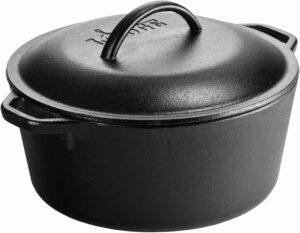
The Lodge Double Dutch Oven is our strongest overall choice because its design addresses the most awkward part of baking sourdough: loading a soft loaf into screaming-hot cookware. The shallow lid doubles as a 10.25-inch dual-handle skillet. Set that skillet side on a heat-safe surface, place the scored dough on it, and lower the deeper five-quart body over the loaf. The arrangement creates the same enclosed steam environment as a conventional Dutch oven while keeping hands farther from tall hot walls. After baking, both pieces return to regular kitchen duty for frying, searing, roasting, and braising.
This is bare cast iron seasoned with oil, not enamel. It tolerates hard use, but the cooking surface needs proper drying and may need additional seasoning over time. Flour and oil can leave marks, and washing habits matter more than with coated cookware. The pot is also heavy, and both the base and lid get dangerously hot. For a baker willing to care for cast iron, those compromises are manageable. The five-quart volume fits many home bakes without creating an enormous steam chamber, and the low loading surface is genuinely useful, not just decorative. Its combination of bread performance, durability, and two-in-one everyday function is hard to beat.
Product Features and Specifications
➡️ Capacity: Five-quart Dutch oven suitable for many standard round sourdough loaves.
➡️ Two-in-one lid: The cover converts into a 10.25-inch dual-handle skillet.
➡️ Material: Bare cast iron seasoned with vegetable oil; no enamel coating.
➡️ Heat sources: Designed for ovens, stovetops, grills, and campfires.
➡️ Handles: Integrated loop handles appear on both the deep pot and skillet lid.
➡️ Approximate size: About 10.25 inches across the cooking area, with a footprint widened by handles.
➡️ Care: Hand-wash as needed, dry promptly, and apply a light coat of oil when the seasoning looks dull.
Pros
✅ Shallow skillet lid makes loading and scoring dough safer and easier.
✅ Five-quart capacity is well matched to many home sourdough boules.
✅ Bare iron handles repeated high-heat bread baking without enamel discoloration.
✅ Lid becomes a useful skillet instead of a single-purpose cover.
✅ Seasoned cast iron can last for decades with proper care.
Cons
❌ Heavy base and lid require confident two-handed handling.
❌ Bare iron must be dried and maintained to prevent rust.
❌ Seasoning can be damaged by poor cleaning or extended acidic cooking.
❌ The black interior makes crust color harder to judge from reflected light.
❌ Handles become extremely hot and require substantial oven mitts.
2. Lodge Essential Enamel 6-Quart Dutch Oven — Best Enameled Value
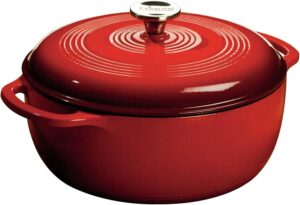
The six-quart Lodge Essential Enamel is a sensible choice for bakers who want one pot for crusty bread, chili, braised chicken, and acidic tomato dishes. Its porcelain-coated cast iron distributes and stores heat effectively, while the fitted lid holds the moisture a loaf releases during oven spring. The round cavity gives a standard boule enough room to expand without moving into the oversized stockpot category. Lodge lists this model as oven-safe to 500°F and compatible with gas, electric, ceramic, and induction cooktops, making it flexible for U.S. kitchens.
Unlike the Double Dutch, this model has conventional tall sides. Dough usually needs to be lowered with parchment or a reusable bread sling, and the baker must keep hands clear of the rim. The enamel also deserves gentler treatment than bare iron: avoid striking the pot, scraping with metal tools, or exposing it to abrupt temperature changes. The interior may develop bread-baking stains that do not affect performance but bother owners who expect a showroom finish. At six quarts, the pot is also weighty. Still, it offers the easy cleanup and nonreactive surface many households prefer, at a price that generally sits below French premium brands. For someone buying one multipurpose enameled Dutch oven, this Lodge balances bread-friendly specifications with everyday practicality.
Product Features and Specifications
➡️ Capacity: Six quarts for standard or somewhat larger round loaves.
➡️ Material: Cast iron with a smooth porcelain-enamel cooking surface.
➡️ Oven rating: Listed as safe up to 500°F.
➡️ Lid: Moisture-sealing fitted lid with a central knob.
➡️ Handles: Dual side handles for two-handed lifting.
➡️ Cooktop compatibility: Gas, electric, ceramic, and induction.
➡️ Care: Hand washing and gradual heating help protect the enamel finish.
Pros
✅ Six-quart size accommodates many sourdough recipes comfortably.
✅ Enameled surface requires no seasoning and handles acidic dishes.
✅ Manufacturer-listed 500°F limit covers common bread temperatures.
✅ Doubles as attractive cookware for soups, braises, and roasts.
✅ Broad side handles offer a more secure grip than small tabs.
Cons
❌ Tall sides make dough loading less convenient than a double Dutch design.
❌ Enamel can chip from impact or careless utensil use.
❌ The interior may discolor after repeated high-temperature baking.
❌ Six-quart cast iron is heavy when moved in and out of the oven.
❌ Empty preheating should follow the current Lodge care instructions.
3. Le Creuset Signature Round Dutch Oven, 5.5 Quart — Best Premium Investment
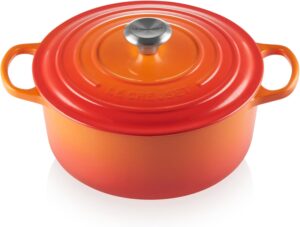
Le Creuset’s 5.5-quart Signature Round Dutch Oven is the premium choice for a baker who wants one heirloom-style pot for more than bread. The enameled cast iron retains steady heat, while the close-fitting lid circulates steam and returns condensation to the food. For sourdough, its capacity lands in the practical middle: large enough for a generous boule without creating the wide, dilute steam chamber of an oversized vessel. The light-colored interior also makes browning, fond, and cleanliness easier to see during everyday cooking.
The Signature design uses enlarged handles, which matter when the pot is hot and bulky oven mitts reduce dexterity. A stainless steel lid knob avoids the lower heat limits associated with some older phenolic knobs. Even so, buyers should confirm the instructions and temperature rating for the exact color and configuration received. The obvious drawback is cost. Bread will not rise several times higher simply because the vessel is French, and repeated baking can leave cosmetic marks on a beautiful interior. It also retains the deep-wall loading challenge of most conventional Dutch ovens. The investment makes the most sense when the pot will also braise, roast, simmer, and serve at the table for years. If sourdough is its only job, a less expensive bare-iron baker offers stronger value.
Product Features and Specifications
➡️ Capacity: 5.5 quarts, a versatile size for boules and family meals.
➡️ Material: Enameled cast iron that requires no seasoning.
➡️ Interior: Light, smooth enamel makes food and browning easy to monitor.
➡️ Lid: Tight-fitting design promotes moisture circulation.
➡️ Knob: Stainless steel on the featured Signature configuration.
➡️ Handles: Enlarged loop handles designed for a secure oven-mitt grip.
➡️ Compatibility: Suitable for common cooktops, including induction, plus oven use within manufacturer guidance.
Pros
✅ Excellent all-purpose 5.5-quart size for bread and family cooking.
✅ Large handles are easier to grasp with thick protective mitts.
✅ Stainless steel knob supports high-temperature versatility.
✅ Light interior helps users see browning and residue.
✅ Enamel requires no seasoning and does not absorb food odors.
Cons
❌ Premium price is difficult to justify for bread alone.
❌ Repeated high-heat baking may leave visible interior discoloration.
❌ Enamel remains vulnerable to chips from impact.
❌ Deep walls require careful dough lowering.
❌ The substantial pot becomes very heavy once hot and loaded.
4. Staub 5.5-Quart Round Cocotte — Best Premium Dark-Interior Option
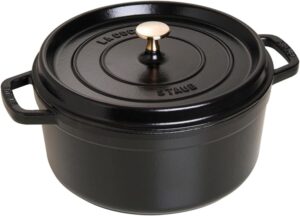
The Staub 5.5-quart Cocotte appeals to bakers who want premium enamel without a pale interior that advertises every baking stain. Its textured matte-black enamel needs no traditional seasoning, and the heavy fitted lid uses small interior spikes to redistribute condensation during slow cooking. Sourdough does not depend on those spikes, but the substantial lid still creates the closed, humid environment needed for strong oven spring and a blistered crust. The 5.5-quart round capacity suits a broad range of home boules.
Staub lists the cast-iron body as oven-safe to very high heat without the lid and the nickel-steel-knob lid to 500°F; for bread, the lower complete-vessel limit is the one that matters. The smooth enamel base works across gas, electric, glass, ceramic, induction, and halogen cooktops. The dark interior hides marks well but also makes residue slightly harder to spot, and the cocotte’s weight can surprise first-time owners. Like Le Creuset, it is expensive if you use it only for weekly loaves. Its value appears when deep browning, stews, braises, and table service share the schedule. Hand washing is recommended, even though the product is listed as dishwasher safe, to protect the finish and edges over time.
Product Features and Specifications
➡️ Capacity: 5.5 quarts for a standard boule or multipurpose family cooking.
➡️ Origin: Made in France according to Staub’s listing.
➡️ Interior: Textured matte-black enamel designed for browning and easy maintenance.
➡️ Lid: Heavy, tight-fitting lid with condensation-return spikes.
➡️ Knob limit: Nickel-steel-knob lid listed as oven safe to 500°F.
➡️ Cooktops: Compatible with gas, electric, glass, ceramic, induction, and halogen.
➡️ Care: Dishwasher safe according to the listing, though hand washing is recommended.
Pros
✅ Dark interior disguises the staining common with frequent bread baking.
✅ 5.5-quart shape suits many home sourdough boules.
✅ Heavy lid traps moisture effectively during oven spring.
✅ Metal knob supports common high-heat bread recipes up to its limit.
✅ Premium construction also excels at browning and braising.
Cons
❌ High purchase price offers limited benefit if used only for bread.
❌ One of the heavier conventional pots in this size class.
❌ Dark enamel makes stuck residue less obvious during cleaning.
❌ Tall sides still create a careful dough-loading step.
❌ Hand washing is preferable for preserving the finish.
5. Cuisinart Chef’s Classic 7-Quart Dutch Oven — Best for Large Loaves
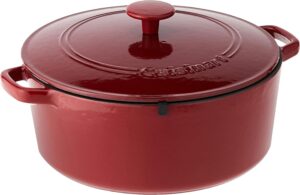
Cuisinart’s seven-quart Chef’s Classic suits bakers who regularly make large loaves or want a Dutch oven that can handle family-size stews and roasts. Its cast-iron body holds heat well, and the porcelain-enamel interior does not absorb odors or impart metallic flavor. That nonreactive surface is helpful when the same pot moves from sourdough to tomato-rich sauces. The round shape accommodates a large boule more naturally than an oval casserole and provides extra headroom for expansion.
More capacity is not automatically better. A modest loaf in a seven-quart chamber may not benefit from steam as efficiently as it would in a closer-fitting five- or six-quart pot, and the larger vessel is heavier and harder to store. Check the interior dimensions against the diameter of your proofing basket rather than choosing by quart rating alone. The model is compatible with induction, halogen, glass-ceramic, gas, and electric stovetops and is described as oven- and broiler-safe. Amazon’s listing also calls it dishwasher safe, although hand washing is gentler on enamel edges and finish. This Cuisinart makes the most sense for a household that wants substantial multipurpose capacity at a midrange tier, not for a solo baker producing compact one-pound loaves.
Product Features and Specifications
➡️ Capacity: Seven quarts for larger boules, roasts, soups, and family meals.
➡️ Construction: Heavy cast iron for heat retention and distribution.
➡️ Interior: Porcelain enamel that does not absorb odors or flavors.
➡️ Exterior: Colored porcelain-enamel finish suitable for table service.
➡️ Heat sources: Induction, halogen, glass-ceramic, gas, electric, oven, and broiler.
➡️ Shape: Round profile with a fitted cast-iron lid.
➡️ Care: Listed as dishwasher safe; gentle hand washing can reduce cosmetic wear.
Pros
✅ Seven-quart capacity gives large loaves room to expand.
✅ Nonreactive enamel suits bread, tomato dishes, and braises.
✅ Broad heat-source compatibility adds everyday versatility.
✅ Porcelain interior requires no seasoning.
✅ Larger volume works well for batch cooking and entertaining.
Cons
❌ Oversized chamber may be inefficient for a small boule.
❌ Seven-quart cast iron is cumbersome to lift and store.
❌ Deep walls increase the difficulty of lowering dough.
❌ Enamel can chip if the large pot is bumped against a sink or rack.
❌ Hand washing such a bulky vessel can be awkward.
6. Crock-Pot Artisan 5-Quart Dutch Oven — Best Affordable 5-Quart Enamel
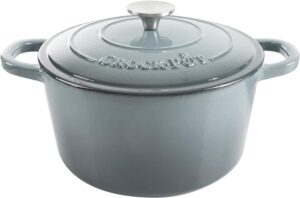
The Crock-Pot Artisan is a straightforward five-quart enameled Dutch oven for buyers who want a boule-friendly size without paying premium cookware prices. Its cast-iron body retains and distributes heat, while the porcelain-enamel finish removes the need for seasoning and simplifies cleanup. The manufacturer markets it for slow cooking, simmering, braising, and baking, so it can remain useful even when a sourdough starter is taking a break. Five quarts is a comfortable fit for many standard home recipes and keeps the steam chamber closer to the loaf than a broad seven-quart pot.
At this tier, expectations should focus on function rather than heirloom refinement. Finish consistency, handle shape, and lid fit may not feel as polished as luxury competitors, and care is still needed to avoid chipping. Amazon’s listing recommends hand washing. The featured configuration uses a conventional central knob, so verify the exact oven-temperature limit in the manual supplied with the pot before following a very hot bread formula. Never assume a metal replacement knob is compatible without confirmation. The deep-sided format also benefits from a parchment sling for safer loading. For an occasional baker who wants enamel, attractive table presentation, and a useful soup pot, the Crock-Pot Artisan offers a practical entry point to cast-iron bread baking.
Product Features and Specifications
➡️ Capacity: Five quarts, appropriate for many standard round loaves.
➡️ Material: Cast iron with porcelain-enamel finish.
➡️ Uses: Baking, braising, simmering, slow cooking, and serving.
➡️ Lid: Matching enameled cast-iron cover with a central knob.
➡️ Handles: Two integrated side handles for lifting.
➡️ Maintenance: No seasoning required.
➡️ Care: Hand washing is recommended by the listing.
Pros
✅ Five-quart volume matches many common sourdough recipes.
✅ More accessible price than French premium enamel.
✅ No seasoning routine is required.
✅ Multipurpose shape works for soups, braises, and baking.
✅ Porcelain finish is easier to clean than bare iron.
Cons
❌ Exact lid-knob temperature limit should be checked before high-heat use.
❌ Finish may feel less refined than premium competitors.
❌ Enameled edges remain vulnerable to impact chips.
❌ Deep pot requires a sling or careful parchment loading.
❌ Hand washing is recommended.
7. Amazon Basics 6-Quart Enameled Dutch Oven — Best Budget 6-Quart Pick
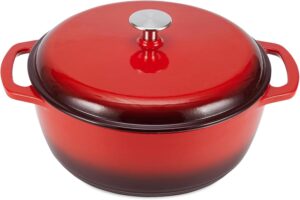
The Amazon Basics six-quart Dutch oven covers the core requirements for a home boule: heavy cast iron, a fitted lid, dual handles, and a manufacturer-listed oven limit of 500°F. Its medium-large capacity suits many recipes and leaves enough room for oven spring without becoming as unwieldy as a seven-quart vessel. The enamel surface needs no seasoning, so a beginner can move from bread to stew without learning bare-iron maintenance on day one.
Budget enamel comes with reasonable compromises. Amazon instructs users to hand-wash the pot, avoid metal utensils and citrus-based cleaners, and treat the smooth coating carefully. The vessel is heavy, and the tall walls make a parchment sling nearly essential for confident loading. Quality-control details and long-term finish durability may not match cookware costing several times more. Still, bread performance depends heavily on stored heat, trapped steam, fermentation, and shaping—not a luxury badge. For a baker who wants to test whether Dutch-oven sourdough will become a lasting habit, this model is a defensible starting point. Its six-quart size also serves four to six people for stews and roasts according to the listing, which helps prevent it from becoming a single-purpose baking pot.
Product Features and Specifications
➡️ Capacity: Six quarts, listed for approximately four to six servings in general cooking.
➡️ Construction: Heavy-duty enameled cast iron.
➡️ Oven limit: Listed as safe up to 500°F.
➡️ Shape: Round pot with matching lid and dual handles.
➡️ Uses: Baking, roasting, braising, sautéing, and stewing.
➡️ Utensils: Avoid metal tools to protect the enamel surface.
➡️ Care: Hand-wash with warm, soapy water; avoid harsh and citrus-based cleaners.
Pros
✅ Affordable six-quart route into enameled bread baking.
✅ Listed 500°F limit covers many sourdough methods.
✅ No seasoning is required before use.
✅ Medium-large capacity also supports family meals.
✅ Dual handles help distribute the lifting load.
Cons
❌ Heavy construction can be difficult for some users to move safely.
❌ Hand washing is required for best care.
❌ Metal utensils and harsh cleaners can damage the finish.
❌ Deep sides make loaf loading less convenient.
❌ Long-term enamel refinement may not equal premium brands.
8. Overmont 5-Quart Double Dutch Oven — Best Budget Inverted Baker
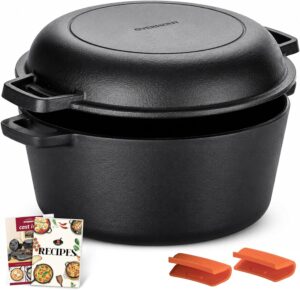
The Overmont five-quart Double Dutch Oven follows the same bread-friendly logic as the Lodge: a deep pre-seasoned cast-iron pot pairs with a shallow lid that doubles as a skillet. For sourdough, the lid can become the base, allowing the baker to place and score the loaf on a low surface before covering it with the deep pot. That arrangement reduces the risk of brushing a wrist against a scorching wall and gives more direct access for decorative scoring. When bread is not on the menu, the lid can fry eggs or sear food while the lower vessel handles soups and braises.
Its appeal is value, but bare cast iron isn’t maintenance-free. The factory seasoning is a starting layer, not a permanent nonstick coating, and users may want to build it gradually with cooking and light oiling. Dry both pieces thoroughly to prevent rust. Fit and surface smoothness may vary more than with an established premium brand, so inspect the item on arrival and follow Amazon’s return policy if it arrives damaged. The assembled pot is heavy, and the handles get extremely hot. For a budget-conscious baker who prioritizes the safer inverted loading method and doesn’t mind seasoning care, the Overmont offers a versatile alternative to conventional tall-sided enamel.
Product Features and Specifications
➡️ Capacity: Five-quart deep pot for common home bakes.
➡️ Two-in-one design: Shallow cover doubles as a cast-iron skillet.
➡️ Material: Preseasoned bare cast iron.
➡️ Bread setup: Can be used with the shallow skillet as the base and deep pot as the cover.
➡️ Handles: Integrated handles on both cookware pieces.
➡️ Heat sources: Suitable for oven, stovetop, grill, and outdoor cooking within seller guidance.
➡️ Care: Hand-wash, dry promptly, and maintain with a thin layer of cooking oil.
Pros
✅ Inverted setup makes transferring and scoring dough easier.
✅ Five-quart capacity fits many standard sourdough loaves.
✅ Skillet lid provides useful everyday cooking value.
✅ Bare cast iron avoids cosmetic enamel staining.
✅ Generally accessible option for budget-focused bakers.
Cons
❌ Requires ongoing drying and seasoning maintenance.
❌ Surface finish may be rougher than expensive cast iron.
❌ Both pieces are heavy and become dangerously hot.
❌ Bare iron is not ideal for long storage of acidic foods.
❌ Quality consistency and lid fit should be checked on arrival.
How to Bake Better Sourdough in a Dutch Oven
➡️ Match the loaf to the vessel: A dough that fills the proofing basket should still have room to expand without touching the pot walls or lid.
➡️ Follow brand-specific preheating guidance: Some manufacturers permit empty preheating, while others recommend different procedures for enameled cookware.
➡️ Use a safe transfer method: Parchment with long corners or a purpose-made silicone sling helps lower dough into a deep pot without reaching inside.
➡️ Confirm every heat limit: The pot, lid, and knob can have different ratings. The lowest rating governs the complete setup.
➡️ Protect the oven and counter: Clear a stable landing area and use a trivet rated for the cookware’s temperature.
➡️ Remove the lid carefully: Open it away from your face because trapped steam can cause burns.
➡️ Finish uncovered: Many recipes bake covered for oven spring, then uncovered to deepen crust color. Follow a tested formula for your dough size.
Frequently Asked Questions
🙋 What size Dutch oven is best for sourdough bread?
📝 A five- to six-quart round Dutch oven is the most versatile starting range for a typical boule made with roughly 500 grams of flour. The exact interior diameter and loaf size matter more than capacity alone. The dough needs room to expand, but a dramatically oversized pot creates a less concentrated steam chamber. Large recipes or broad proofing baskets may need seven quarts.
🙋 Do I have to preheat the Dutch oven before adding dough?
📝 Many sourdough methods use a fully preheated vessel to encourage rapid oven spring, but cookware brands do not all give the same advice—especially for empty enameled pots. Follow the current manufacturer care instructions and a recipe designed for your method. Cold-start Dutch-oven bread is also possible when a tested formula calls for it.
🙋 Can enameled cast iron safely bake bread at 500°F?
📝 Only if the exact pot, lid, and knob are each rated for that temperature. Several models in this guide are listed to 500°F, but specifications can vary by configuration and change over time. Never assume the cast-iron body’s rating automatically applies to a lid knob. Use the lowest published limit for the assembled vessel.
🙋 How do I keep sourdough from sticking to the Dutch oven?
📝 Place the shaped loaf on baking parchment or a reusable sling that is approved for your baking temperature. A light dusting of rice flour on the dough can also reduce sticking to a proofing basket. Avoid pouring loose flour or oil into a blazing-hot enameled pot, where it can burn and smoke.
🙋 Will baking bread damage the enamel?
📝 Normal use within the manufacturer’s temperature and care instructions should not ruin suitable enameled cookware, but repeated high heat can cause cosmetic staining. Thermal shock, metal tools, impact, and overheating beyond the stated limit create greater risk. Let the pot cool gradually and wash it gently rather than placing a hot vessel in cold water.
Conclusion: Best Dutch Ovens for Baking
The Lodge 5-Quart Double Dutch Oven is our top recommendation for a dedicated home baker because its skillet lid creates a low-loading surface, and the bare-iron construction handles repeated use without concern about enamel discoloration. The Overmont Double Dutch Oven offers a similar workflow at a budget-focused tier, though Lodge has a stronger, more established cast-iron reputation.
For enamel, the Lodge 6-Quart Essential Enamel offers the best balance of capacity, temperature rating, price, and everyday usefulness. Choose Le Creuset or Staub when premium finish and long-term multipurpose cooking justify the investment. The Crock-Pot Artisan and Amazon Basics models are approachable entry points, while the seven-quart Cuisinart is better for large loaves and family batches.
The finest pot cannot rescue under-fermented dough, but the right shape makes successful baking easier and safer. Match the vessel to your usual loaf, confirm the complete temperature rating, and choose handles you can grip securely with thick mitts. Once those basics are right, a dependable Dutch oven can deliver crisp, beautifully risen sourdough for years.